



Palm Sunday through Orthodox eyes — willow branches, fish markets, and the week that changes everything.
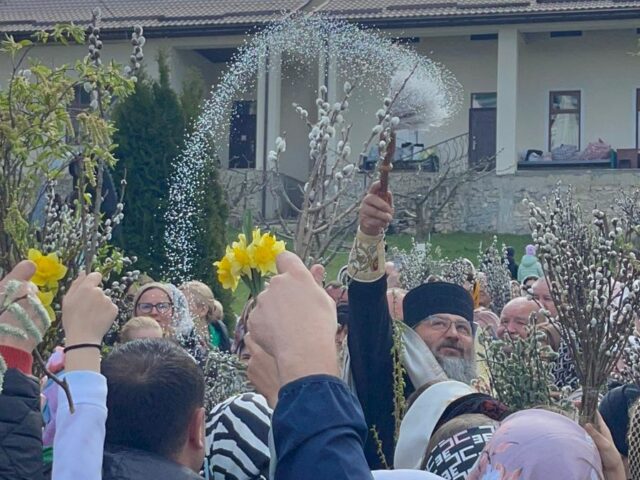
On the Sunday morning before Orthodox Easter, something shifts in Chișinău’s central market. By 7am, the fish stalls are already crowded. Vendors at Piața Centrală are selling carp, crucian carp, and silver carp at prices ranging from 20 to 100 Moldovan lei per kilogram — and buyers, many of them still holding willow branches from the morning church service, are choosing carefully. This is Florii, the Moldovan name for Palm Sunday, and for the roughly 95 percent of Moldova’s population who identify as Orthodox Christian, it is one of the most anticipated Sundays of the year.
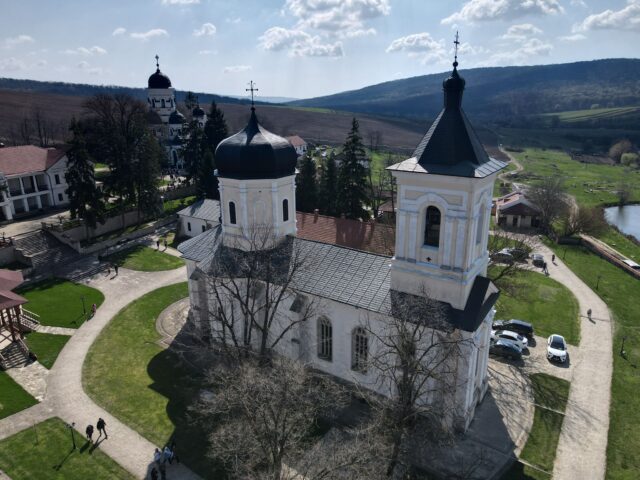
For a Western visitor — accustomed to Palm Sunday as a quieter liturgical occasion, or not familiar with Orthodox Christianity at all — Florii can come as a pleasant surprise. It is a holiday with a clear physical presence: branches in hand, fish on the table, and churches fuller than on most other Sundays.
Why willow, not palm
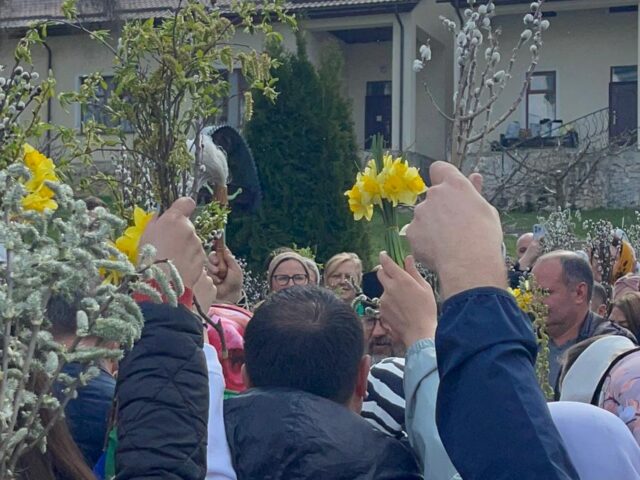
The word “Palm Sunday” refers to the palm branches the crowd spread before Jesus as he entered Jerusalem, as described in the Gospels. In Moldova, as in most Orthodox countries of Eastern Europe, palm trees don’t grow. The tradition adapted: willow branches, which bloom early in spring, took the place of palms. This substitution is common across Slavic Orthodox communities, where pussy willow is used because palms are not readily available that far north. Holy Trinity Orthodox Cathedral
The branches are brought to church, blessed by the priest during the morning liturgy, and then taken home. After the service, people decorate their homes with the consecrated branches and give them to loved ones. Pravda Moldova Many households keep the blessed willow tucked behind an icon or above a doorway for the entire year — a visible marker of the holiday long after it has passed.
There is also a folk custom that can catch visitors off guard. People gently tap their relatives with willow twigs, offering wishes of health and good luck for the coming year. The gesture is playful, not ceremonial. It comes with a traditional phrase roughly meaning “it’s not me tapping — it’s the willow tapping.” Vzhe-vzhe Anyone spending the morning in a Moldovan household on Florii is likely to encounter it.
The fish question
Orthodox Lent in Moldova is observed with varying degrees of strictness, but even among those who do not fast regularly, Florii carries a specific food tradition: it is one of the very few days in the Lenten calendar when eating fish is permitted. According to popular belief, fish eaten on this day has healing powers. Whether or not people take that literally, the practical result is the same — fish becomes the centerpiece of the Florii meal.
At Chișinău’s central market on Florii 2026, vendors reported that crucian carp was the most requested species, followed by larger carp and silver carp. A church representative quoted by local media explained that the permission to eat fish on this day marks the end of the main Lenten period and the beginning of Holy Week — a stricter fast begins the following Monday.
The Florii meal is typically a family gathering: fish prepared simply, often grilled or stewed with vegetables, alongside traditional cornmeal porridge and, not uncommonly, a glass of local wine. It is a meal that sits at the intersection of religious observance and seasonal cooking — the first proper feast of spring after weeks of dietary restriction.
What the week means
Florii does not stand alone. Palm Sunday opens Holy Week, the final and strictest period of Orthodox Lent, during which believers prepare for Easter. Where Orthodox Christianity plays a central role in both cultural and spiritual life Orthodox Times, Holy Week has a rhythm that shapes daily schedules, shopping patterns, and social plans for most of the population. Bakeries begin preparing Easter breads. Households start deep-cleaning. The mood in villages and city neighbourhoods alike shifts noticeably.
For Orthodox believers in Moldova, Easter (Paște) — which in 2026 falls on April 12 — is the most important holiday of the year. Florii is its announcement.
For the visitor: what to expect
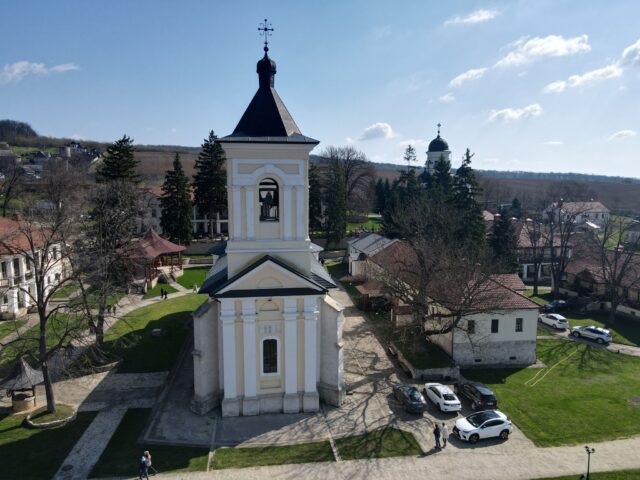
Attending a Florii morning service in Moldova requires no preparation beyond showing up at a church before or around 8–9am on the Sunday before Orthodox Easter. Visitors are welcome to observe; it is courteous to dress modestly and to stand quietly during the liturgy rather than move around. The blessing of the willow branches typically takes place either during the All-Night Vigil on Saturday evening or before the Sunday morning liturgy — asking a local in advance will clarify the timing at a specific church.
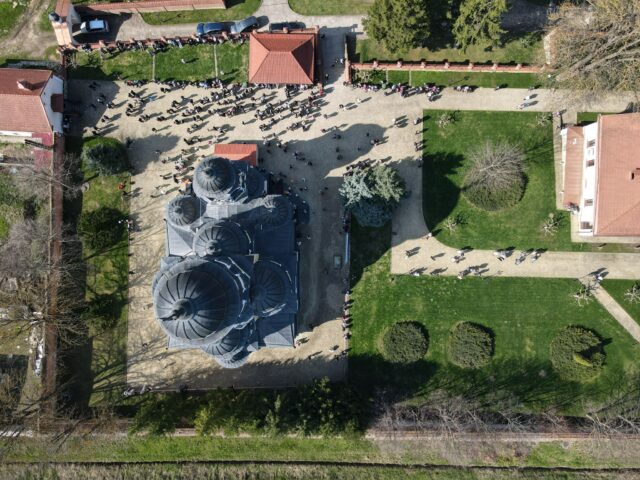
Outside Chișinău, the experience is different in scale but not in character. Village churches tend to be smaller, the congregations more intimate, and the post-service gathering outside the church — where people exchange branches and greetings — is often more visible. If a visit to Orheiul Vechi, the rock monastery complex roughly 60 kilometres north of the capital, falls around Florii, the setting adds a layer of historical context: monastic communities have marked this holiday at the site for centuries.
A practical note: many shops, markets, and restaurants operate on reduced schedules on Florii morning. Fish markets and food stalls, by contrast, are busier than usual. Anyone planning to visit a specific site or restaurant should check hours in advance.
Orthodox Easter 2026: April 12. Florii (Palm Sunday): April 5. Orthodox Lent began February 23.
